
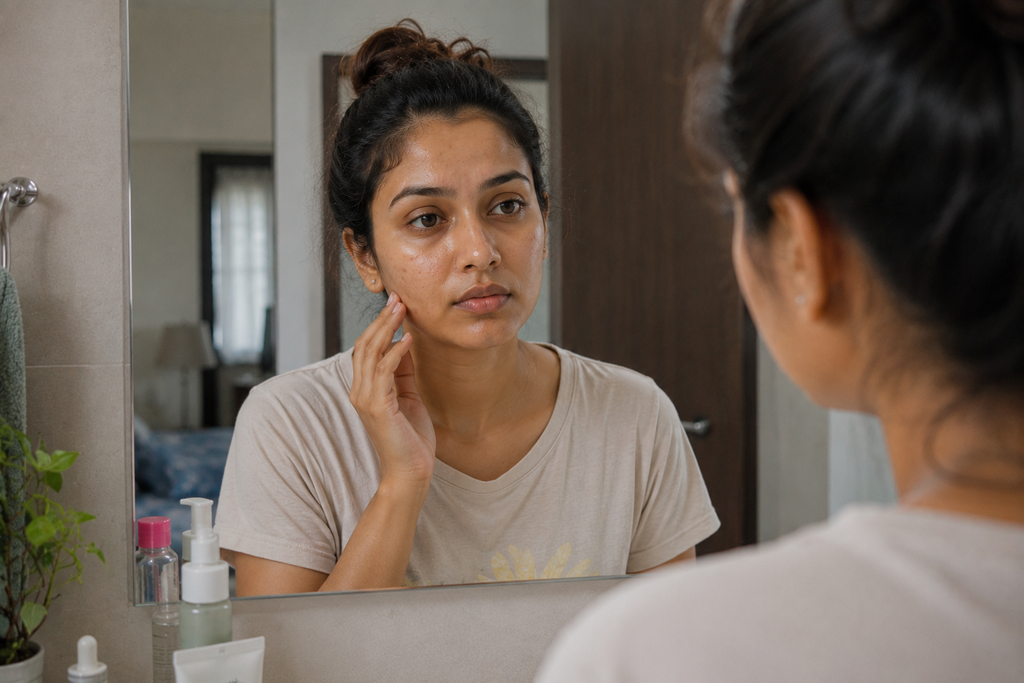
Why Oily Skin Gets Worse During Changing Seasons: How Heavy Moisture Clogs Your Face
We have all been there. You wash your face with your favourite face wash, look in the mirror, and feel great. But in just 10 minutes, you step outside into the humid air or the dusty market, and boom—your face looks like a greased paratha.
That sticky, stubborn “chipchip” feeling is the ultimate struggle for anyone with oily skin. And when the mausam transitions, like summer turning into monsoon or the sticky pre-winter weeks, our skin completely loses its balance. And suddenly, your cheeks and jawline break out in painful, recurring pimples.
Why does this happen right when the weather shifts? Let’s look at the real reasons and how to finally get clear skin without disrupting your daily routine.
Why Oily Skin Gets Worse During Changing Seasons: How Heavy Moisture Clogs Your Face
1. The Weather Shift: Humidity Meets Changing Water
When seasons change in India, your skin faces a double attack: a massive spike in humidity and a shift in your household water supply.
In many Tier 2 and Tier 3 cities, we frequently switch between different water sources depending on the season. Moving from municipal tap water to underground boring water, or relying on hard groundwater tankis when supply runs low.
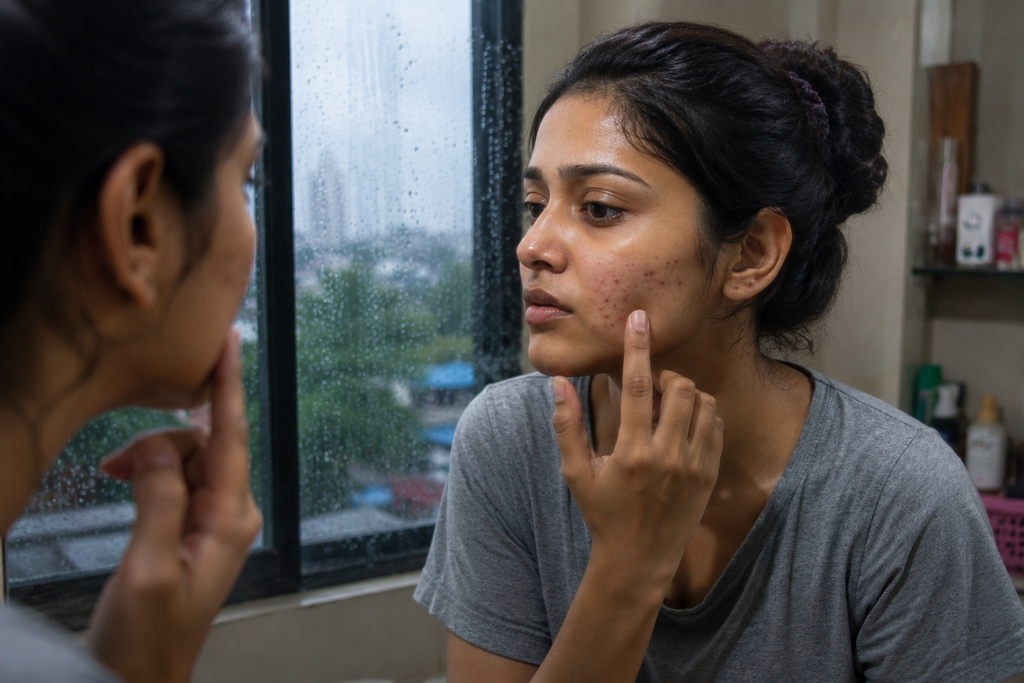
"High humidity and switching between groundwater sources triggers the sebaceous glands to overproduce oil. It traps the bacteria, leading to recurring jawline and cheek acne." Hard groundwater leaves an invisible, mineral-heavy film on your skin that doesn't rinse off easily. This film locks in sweat and excess sebum, creating a perfect breeding ground for pimples right where your helmet strap or phone touches your face.
2. The Trap of Over-Washing and Heavy Creams
· Washing your face 5-6 times a day: Splashing water or using a harsh soap repeatedly strips your face of its natural moisture. Your brain panics and sends a signal to produce more oil to compensate.
· Using thick winter creams too early: TV commercials show models applying heavy, buttery moisturizers for a glowing look. But on oily skin during a humid season change, these heavy creams act like plastic wrap,they block your pores, trap sweat, and clog your face.
3. How to Break the Cycle and Keep Pores Clean
You don't need a complicated, expensive 10-step skincare routine. You just need to follow a few simple, practical steps:
Use a Gentle Face Cleanser, for example, sulphate or paraben-free cleansers : Put away the harsh, skin-stripping soaps. Switch to a mild gel-based face cleanser that gently removes excess oil without making your skin feel tight or stretchy. Wash your face only twice a day, once in the morning and once before bed. If it gets sticky in between, just use a clean, damp cotton handkerchief.
Switch to Lightweight Hydration: Oily skin still needs moisture, but it needs water and gel-based hydration, not heavy oils. Replace thick creams with a lightweight, oil-free gel moisturizer that sinks into the skin instantly without adding weight.
Use Powder Face Masks: Instead of overloading your skin with synthetic chemicals, rely on a natural, deep-cleansing approach. Deep oil-absorption via powder face masks cleans pores without stripping essential natural hydration. Unlike heavy cream masks that leave a greasy layer behind, a traditional powder face mask, which is made with simple ingredients like multani mitti, neem, or sandalwood, acts like a magnet for dirt. When mixed with plain or rose water, it draws out deep-seated impurities and hard-water minerals. Using a natural face pack for glowing skin once or twice a week is a time-tested way to keep the “chipchip” away and calm down stubborn jawline breakouts.
The Bottom Line
Your skin isn't "bad".It's just reacting to the changing weather and water around you. Keep your routine simple: cleanse gently, hydrate lightly, and let a natural powder mask do the heavy lifting. With a little patience, your skin will clear up and stay healthy all season long!
Related post

31
Aug

17
Jul
RECENT POSTS
31.August.2026
The ‘Instant Parlour Facial’ Trap: Why Bleaches and Chemical Clean-ups Leave Your Skin Duller Later
0 Comments
17.July.2026
The Mobile Screen Strain: How Late-Night Scrolling is Aging and Darkening Your Under-Eyes
0 Comments
16.July.2026
Why Oily Skin Gets Worse During Changing Seasons: How Heavy Moisture Clogs Your Face
0 Comments


